Engineered Environmental Control Systems (API Plans):
An essential element to the successful operation of mechanical seals is the right application of the appropriate environmental controls. Mechanical seals need to be kept cool, clean and lubricated, a mantra you will hear at any mechanical seal training seminar. API (American Petroleum Institute) has assembled and organized the plans numerically under its API 682 code for mechanical seals, to ensure that everyone is operating off a standard set of descriptions and nomenclature. The standardized plans may be further altered to each customer’s specific preferences (e.g. switches vs. transmitters).
The environmental controls cover a broad range of offerings from simple flush plans, to seal reservoirs or forced fluid systems for dual seals, to highly engineered gas panel systems and controls for non-contacting and contacting seals.
PPC manufactures all of the relative support systems and environmental controls to optimize the life of your mechanical seals. Systems include a multitude of configurations. (ANSI, API, DIN, U and UM coded, CRN’s, etc). Typical system plans: 12, 21, 23, 32, 52, 53, 53B, 54, 55, 65, 72, 74, 75, and 76. We have standard systems and we custom manufacture to your specific specifications.
PPC can further assist you with the simple but critical, sizing of bushings for plan 21, 23, 32 and calculating the heat requirements for complex wet systems for dual seals (skid 54’s), and gas system requirements for dry running and lift off seals (contacting and non-contacting seals).
Contact us to help maximize your seal life by applying the best support solution for your mechanical seals.
Recommended Documentation
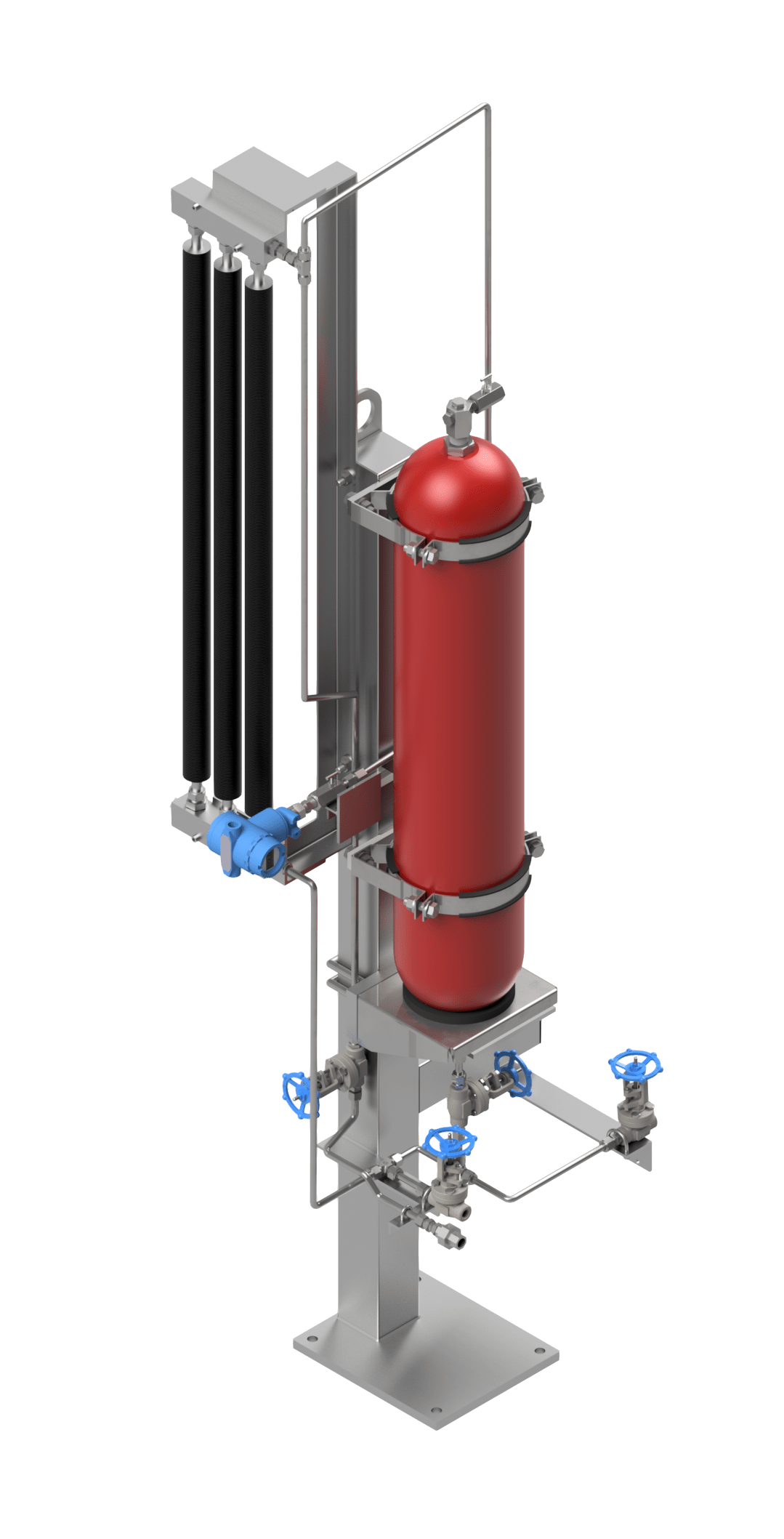
PPC Plan 53B
PPC’s API Plan 53B is a seal system utilizing a bladder accumulator to maintain continuous pressure on the seal without a constant external source. The system is coupled with a dual mechanical seal with the barrier fluid between the sets of faces pressurized greater than the process.
Multiple accessories are available including water and air-cooled heat exchangers sized for the application, pressure and temperature instrumentation, and built-in hand pumps with reservoirs to simplify maintenance.
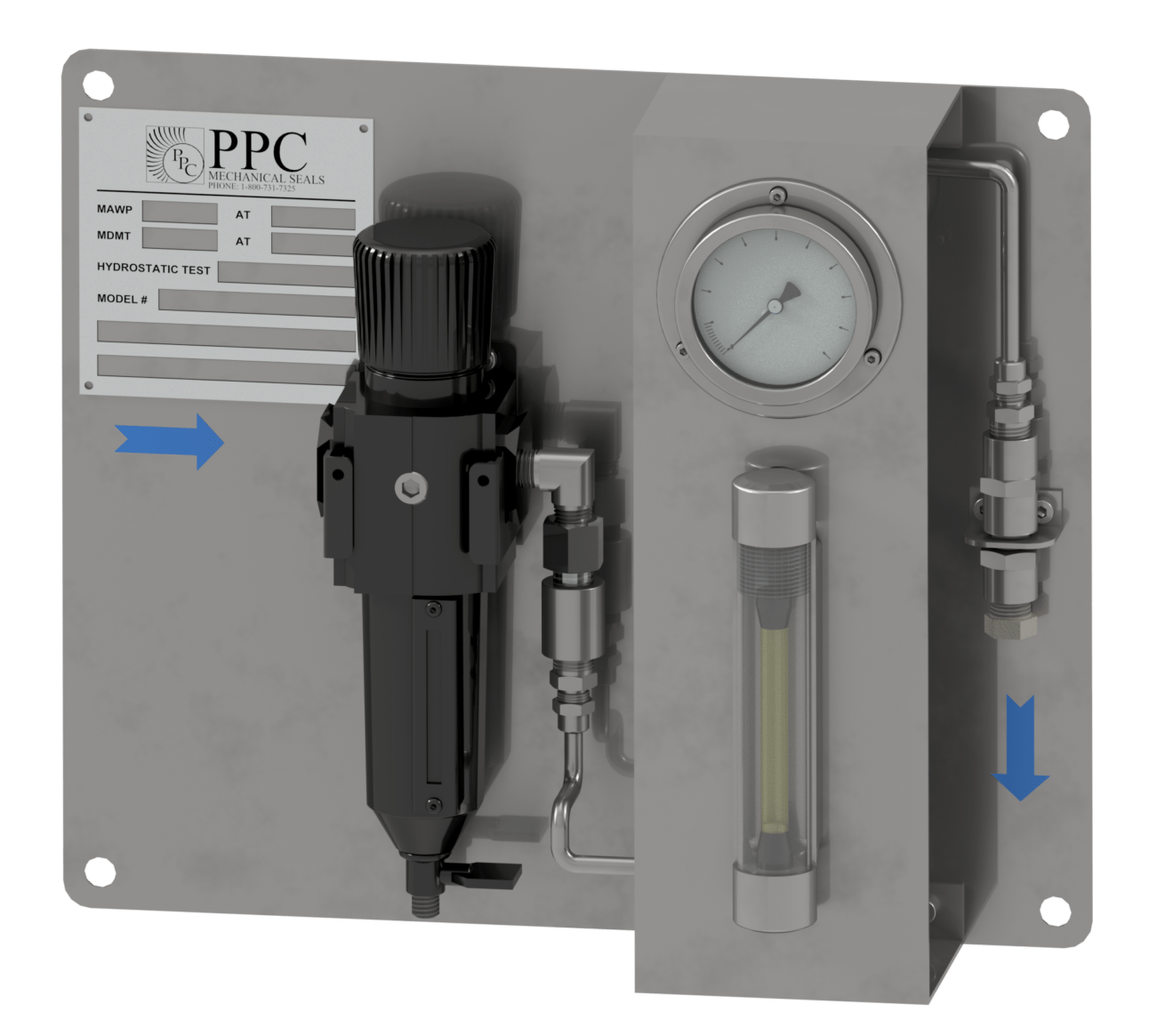
PPC Plan 74
With a Plan 74 gas panel from PPC: clean, monitor, and regulate an external gas source to be used as a barrier in a double seal. The all-in-one panel system is typically used on lift-off gas seals such as the PPC 7000G/GB but can find use in contacting gas seals as well.
Standard equipment includes a pressure-reducing regulator, filter, orifice, flowmeter, pressure gauge and check valve, all mounted on a stainless-steel panel. Additional designs are available, and each panel can be customized to suit your application.
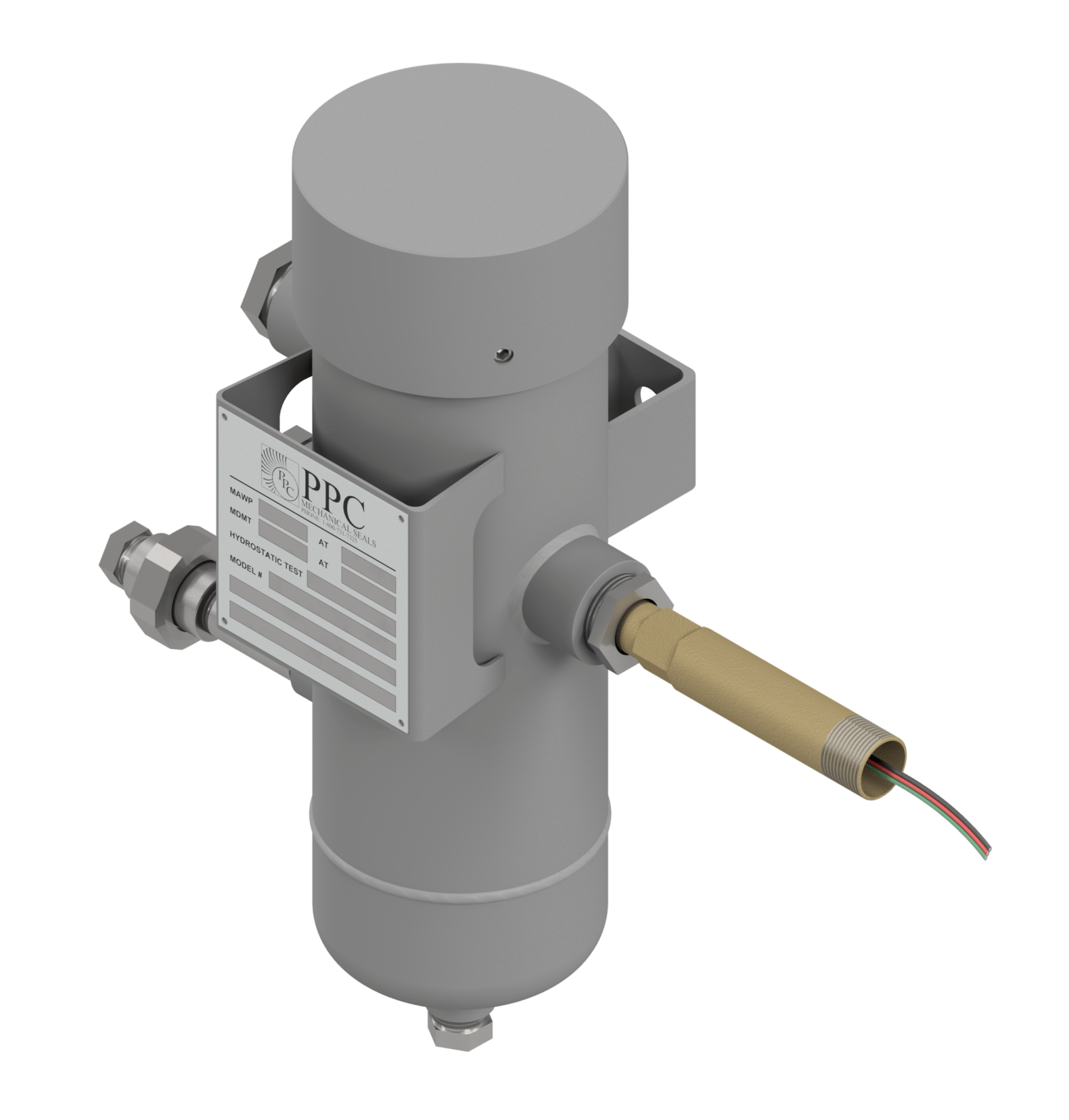
PPC Plan 65A
PPC offers various leakage reservoir systems, both standardized and custom. With a plan 65A system, leakage from the seal is safely routed to a reservoir where the rate of leakage is measured to allow for normal operation, and then signal an alarm when excessive leakage is detected.
Reservoirs may be carbon steel or stainless-steel construction, and systems are typically supplied with a float-style level switch and relay output signal. Level transmitters are also available to meet compliance with API Standard 682, 4th edition.
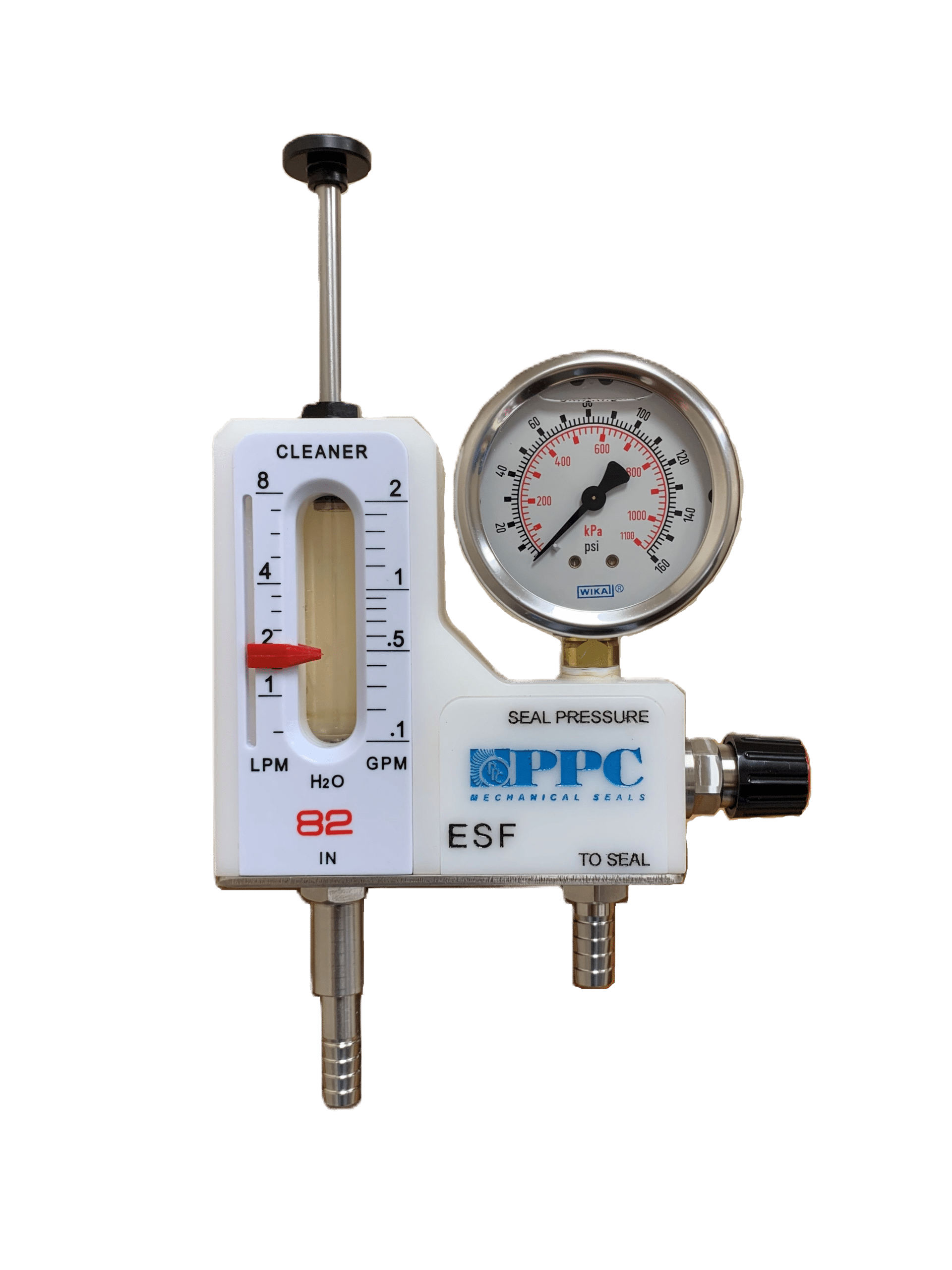
PPC Seal Water Controller
For economical and effective seal water control, PPC can supply an all-in-one pressure regulator and metering device. Using a PPC controller can significantly reduce water consumption and increase reliability when properly set up with a mechanical seal.
The controller has a built-in tube cleaner so the meter face can always be visible, and multiple body materials and flow ranges are available to suit your application. A local pressure gauge as well as alarms can be installed from the factory so that the unit is ready for connection and operation once received. Click below to see the brochure for additional information.